Knowledge Hub
A repeatable and lean framework for building valuable products, with proven guides and best practices across product, design, and engineering.
Role clarity matters from the very first line of code, not just when you start scaling. Even a three-person team benefits from knowing who owns product decisions, technical architecture, and design quality. Without that clarity, every feature request turns into fifty message threads before anything actually gets built.
The key difference between high-performing teams and those constantly fighting fires? Everyone knows exactly what they own and how their work connects to everyone else's. Unfortunately, many companies operate with overlapping responsibilities, zero clarity about who makes which decisions, and team coordination held together by Slack messages and good intentions. That pattern gets more expensive as you grow, but it causes problems well before you start hiring aggressively.
Whether you're a founding team of five or rapidly onboarding after a fundraise, you can't afford the chaos that comes with unclear roles and responsibilities.
Key Takeaways
- Role clarity determines whether your team operates as a coordinated unit or a group of capable individuals pulling in different directions.
- Clear roles answer three questions: who decides what, who owns which outcomes, and how teams coordinate across functions.
- Many scaling problems that look like "hiring issues" or "communication breakdowns" are actually role clarity problems in disguise.
- A well-defined structure lets you add team members without slowing velocity due to knowledge-transfer overhead or onboarding confusion.
The Five-Role Framework
Roles & Responsibilities serve as the structural foundation of THE OAK'S LAB WAY. How you define roles determines whether your team operates as a coordinated unit or as a collection of talented but chaotic individuals.
This isn't about updating org charts. An effective role structure answers three questions that actually enable day-to-day success: who decides what, who owns which outcomes, and how teams coordinate without constantly stepping on each other's toes.
One important note: this framework operates at the team level. Every team needs these five areas covered. Companies with multiple teams will also need to consider how those teams orchestrate, but that's a separate challenge. Getting role clarity right within each team is the foundation.
Roles That Drive Results
Product Lead
Our Product Lead owns the "what" and "why" of product decisions. They translate business goals into specific product requirements and make sure every feature serves a clear strategic purpose.
What do they decide? Feature prioritization, scope definition, user story acceptance, and product roadmap evolution.
What are they responsible for? Product-market fit, user adoption metrics, feature usage data, and alignment between your business goals and product capabilities.
What does the work look like? Conducts user research and defines requirements. Manages stakeholder communication and ensures work connects to business outcomes. Makes trade-off decisions when resources are limited, because resources always are.
How do they collaborate? Works daily with the Tech Lead on feasibility and implementation, collaborates with the Design Lead on user experience decisions, and communicates regularly with business stakeholders to keep priorities grounded in reality.
Tech Lead
The Tech Lead owns technical architecture, code quality, and engineering coordination. They make sure product requirements translate into robust, scalable technical solutions that won't collapse under pressure as your user base grows.
What do they decide? Software architecture choices, code review standards, technology stack decisions, and engineering resource allocation.
What are they responsible for? System performance, code quality metrics, technical debt management, and development team productivity.
What does the work look like? Designs architecture and reviews code. Mentors developers and makes technology choices that support scalability without over-engineering. Estimates effort and identifies technical risks early, before they become expensive surprises mid-sprint.
How do they collaborate? Collaborates with the Product Lead on feature feasibility and technical constraints, works with the Design Lead to ensure designs are actually implementable, and coordinates with QA to maintain quality standards across the board.
Design Lead
The Design Lead owns user experience, interface design, and design system consistency. They ensure product features solve real user problems through intuitive, well-designed interfaces that people actually want to use.
What do they decide? User experience approaches, interface design standards, design system evolution, and user research methodologies.
What are they responsible for? User satisfaction metrics, interface usability scores, design system adoption, and user onboarding success rates.
What does the work look like? Conducts user research and creates wireframes. Maintains design system consistency and ensures features meet usability standards before they reach engineering.
How do they collaborate? Works closely with the Product Lead on user requirements and business constraints, collaborates with the Tech Lead on implementation feasibility (because a beautiful design that can't be built isn't very helpful), and coordinates with Engineers during the design-to-development handoff.
Software Engineers
Software Engineers own code implementation, feature delivery, and technical execution. They transform requirements and designs into working software that meets quality and performance standards.
What do they decide? Implementation approaches, code organization, testing strategies, and technical tool choices within the established architecture.
What are they responsible for? Feature delivery timelines, code functionality, bug resolution, and adherence to technical standards.
What does the work look like? Writing production code and automated tests. Participating in code reviews, ensuring features meet requirements, and identifying and resolving technical issues before they reach users.
How do they collaborate? Receive requirements from the Product Lead, coordinate with the Design Lead during implementation, align with the Tech Lead on technical decisions, and collaborate with QA on testing and bug resolution.
QA Engineer
The QA Engineer owns quality assurance, testing processes, and defect prevention. They ensure all features meet functional requirements and that the system stays stable as your product evolves.
What do they decide? Testing methodologies, quality standards, bug severity classifications, and release readiness assessments.
What are they responsible for? Bug detection rates, system stability metrics, test coverage percentages, and user-reported defect frequency.
What does the work look like? Designs test cases and executes testing. Documents defects and validates fixes. Maintains testing environments and ensures quality standards are followed throughout the development cycle.
How do they collaborate? Works with the Product Lead to understand feature requirements, coordinates with Engineers on bug reproduction and resolution, and collaborates with the Tech Lead on testing infrastructure and automation.
The Business Impact of Role Clarity
Clear roles and responsibilities directly impact the outcomes that matter most to growing companies:
Faster decision-making. Your team removes bottlenecks when everyone knows who decides what. No more three-day delays before someone realizes a decision is theirs to make.
Consistent quality standards. Each role has specific quality standards, so quality remains consistent across all deliverables rather than varying based on who happens to work on the feature.
Predictable delivery timelines. Clear ownership enables accurate estimates and reliable schedules that your stakeholders can trust, rather than the "it'll be done when it's done" approach that erodes confidence.
Reduced coordination overhead. Your team spends time building rather than clarifying responsibilities or debating who handles what. In our experience, this alone can reclaim a surprising number of engineering hours per sprint.
Smoother team growth. New members understand their place in a well-defined structure from day one, cutting onboarding time and maintaining velocity as the team evolves. This matters whether you're adding your sixth team member or your thirtieth. If you're thinking about how to structure your team as you grow, role clarity provides the foundation on which everything else builds.
What This Means in Practice
Here's how our teams establish role clarity from the start of every engagement.
1. We identify where decision ownership is unclear
For the first couple of weeks, we track every decision that takes longer than it should because nobody knows who owns it. Design approvals, technical architecture choices, feature prioritization calls.
- Validate by asking a few people on the team: "Who decides X?" If we get different answers from different people for the same decision, we've found the problem. It's not a communication issue.
- Red flag: Decisions consistently require meetings with a large group because nobody is confident making the call alone. That's a sign of missing ownership, not healthy collaboration.
2. We map responsibilities to outcomes, not tasks
We define each role's responsibilities in terms of outcomes they own (user adoption, system performance, design consistency), not just tasks they perform. Tasks change from sprint to sprint. Outcomes provide consistent accountability.
- Validate by checking whether each role can explain what they're accountable for in business terms, not just what they do day to day. "I own user onboarding success rates" is clearer than "I make wireframes."
- Red flag: Two roles think they own the same outcome. This usually happens between Product Leads and Design Leads regarding user experience, or between Tech Leads and Engineers regarding architectural decisions. We sort it out before it causes friction.
3. We test the structure with a real scenario
We walk through a recent feature from request to deployment and identify who made each decision, who was consulted, and where things got stuck. Then we compare that to how decisions should flow in the intended structure.
- Validate by checking whether the feature went through clean handoffs or bounced back and forth between roles. Clean handoffs indicate clear ownership. Bouncing indicates overlapping or undefined responsibilities.
- Red flag: One person appears at every decision point throughout the feature lifecycle. That person is a bottleneck, and the team's velocity depends on their availability. That's a structural risk, no matter how talented that person is.
Common Questions About Roles and Responsibilities
Q: We're a small team. Do we really need five distinct roles?
A: You need the five functions covered, but not necessarily by five separate people. On smaller teams, one person might fill multiple roles: your CTO might serve as both Tech Lead and QA, or your founder might handle Product Lead responsibilities alongside business development. What matters is that every function has a clear owner, even if some people wear multiple hats. The problems start when a function has no clear owner, and things fall through the cracks.
Q: How does this framework work when collaborating with an external development partner like OAK'S LAB?
A: It becomes even more important. When your internal team and an external partner both have people filling these roles, you need explicit agreements on who owns what across the combined team. Does your internal Product Lead set the roadmap, or does the partner's? Who has final say on architecture? We define these boundaries at the start of every engagement precisely because ambiguity between internal and external teams creates the messiest coordination problems.
Q: What happens when there's overlap between roles, like a Tech Lead who wants to influence product decisions?
A: Some overlap is healthy and expected. You want your Tech Lead to push back on product decisions that are technically impractical, and you want your Product Lead to understand architectural constraints. The framework doesn't prevent cross-role input. It clarifies who makes the final call. When there's a disagreement about feature scope, the Product Lead decides. When there's a disagreement about the implementation approach, the Tech Lead decides. The overlap in input is a feature. The overlap in decision authority is the problem.
Q: How does OAK'S LAB introduce clear roles without it feeling like added bureaucracy?
A: We frame it as removing confusion, not adding process. Most team members are already frustrated by unclear ownership. They've sat in meetings wondering whose decision this is, or rebuilt work because requirements came from three different people. Clarifying roles doesn't add new work. It eliminates the coordination tax that the team is already paying. We start by documenting who decides what for the most common decision types and share it with the team. That single document often resolves more confusion than months of "improved communication."
Q: What happens when someone leaves? Does the structure fall apart?
A: If the structure depends on specific individuals rather than defined roles, yes. That's why role clarity matters more than having the "right" people. When responsibilities are attached to a role with documented ownership and clear decision authority, a new hire can step in and understand their scope immediately. When responsibilities are attached to a person through institutional knowledge and informal agreements, losing that person creates chaos. One of the biggest benefits of this framework is that it makes your team resilient to turnover, which is critical when you're scaling fast.
Subscribe to our newsletter and receive the latest updates from our CEO.
All articles
(42)
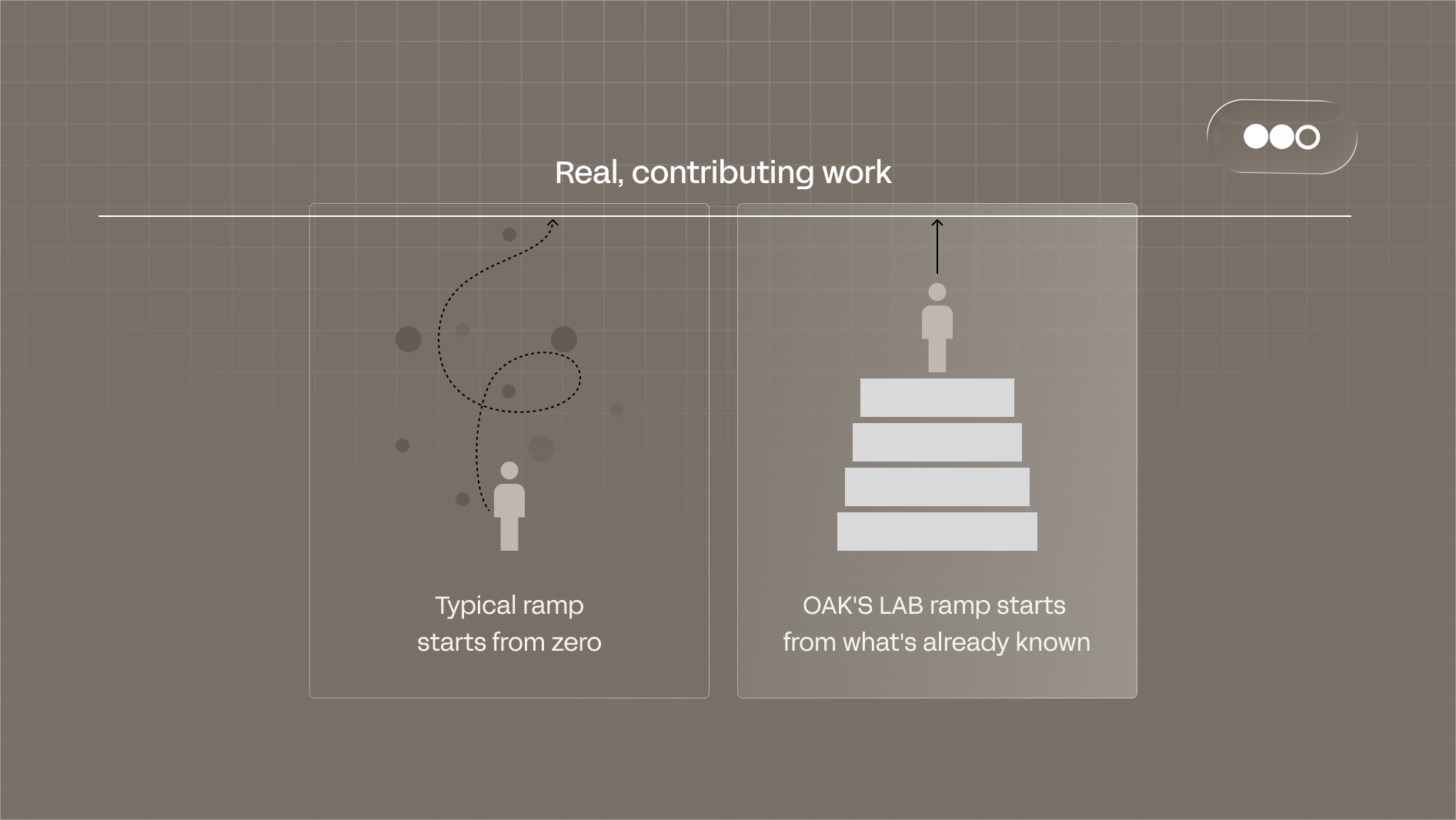
How Senior Engineers Ramp in Their First Week
Product Development
September 8, 2026
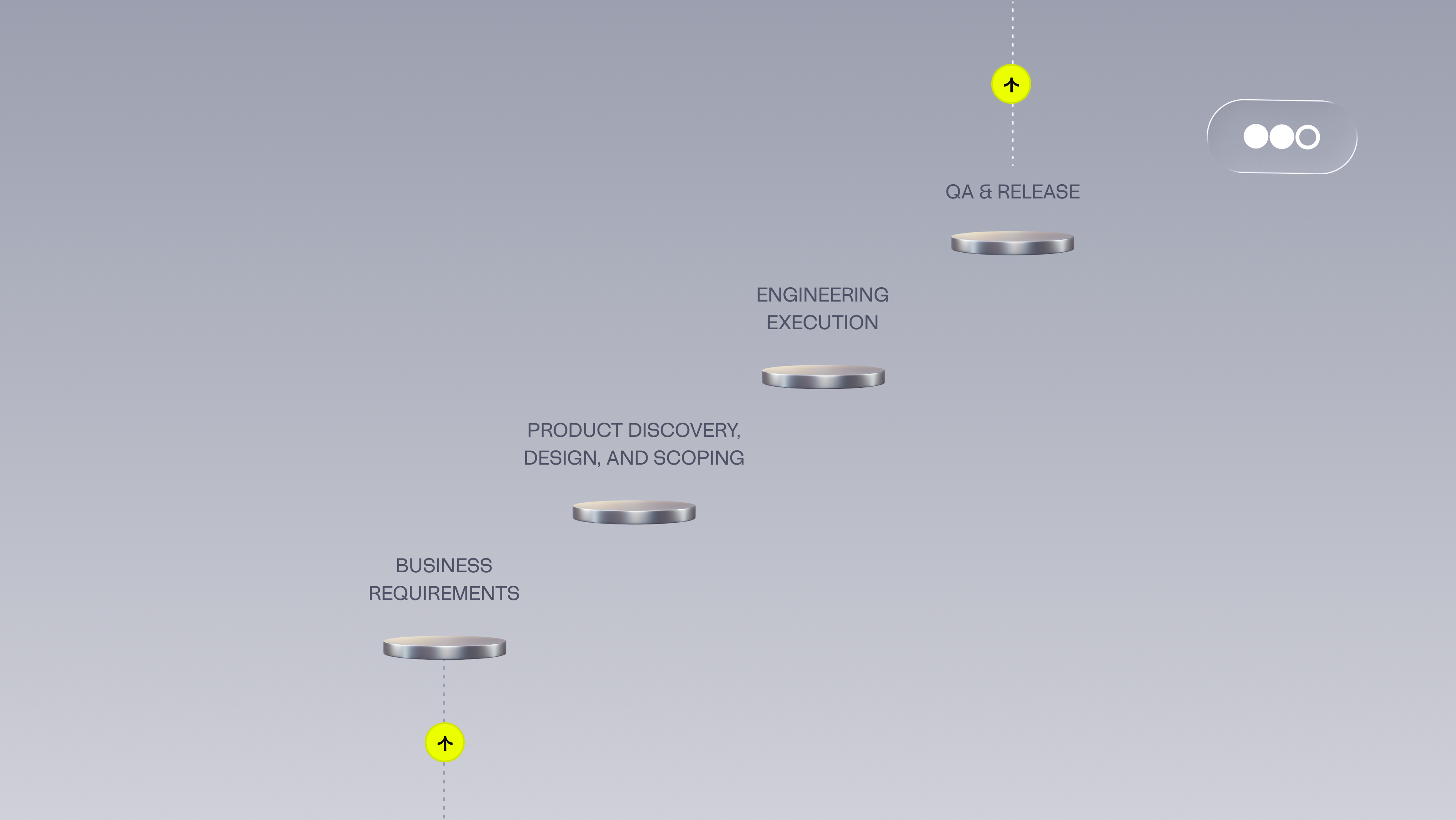
Why More Engineers Won't Fix Your Velocity Problem
Product Development
Technology
August 5, 2026
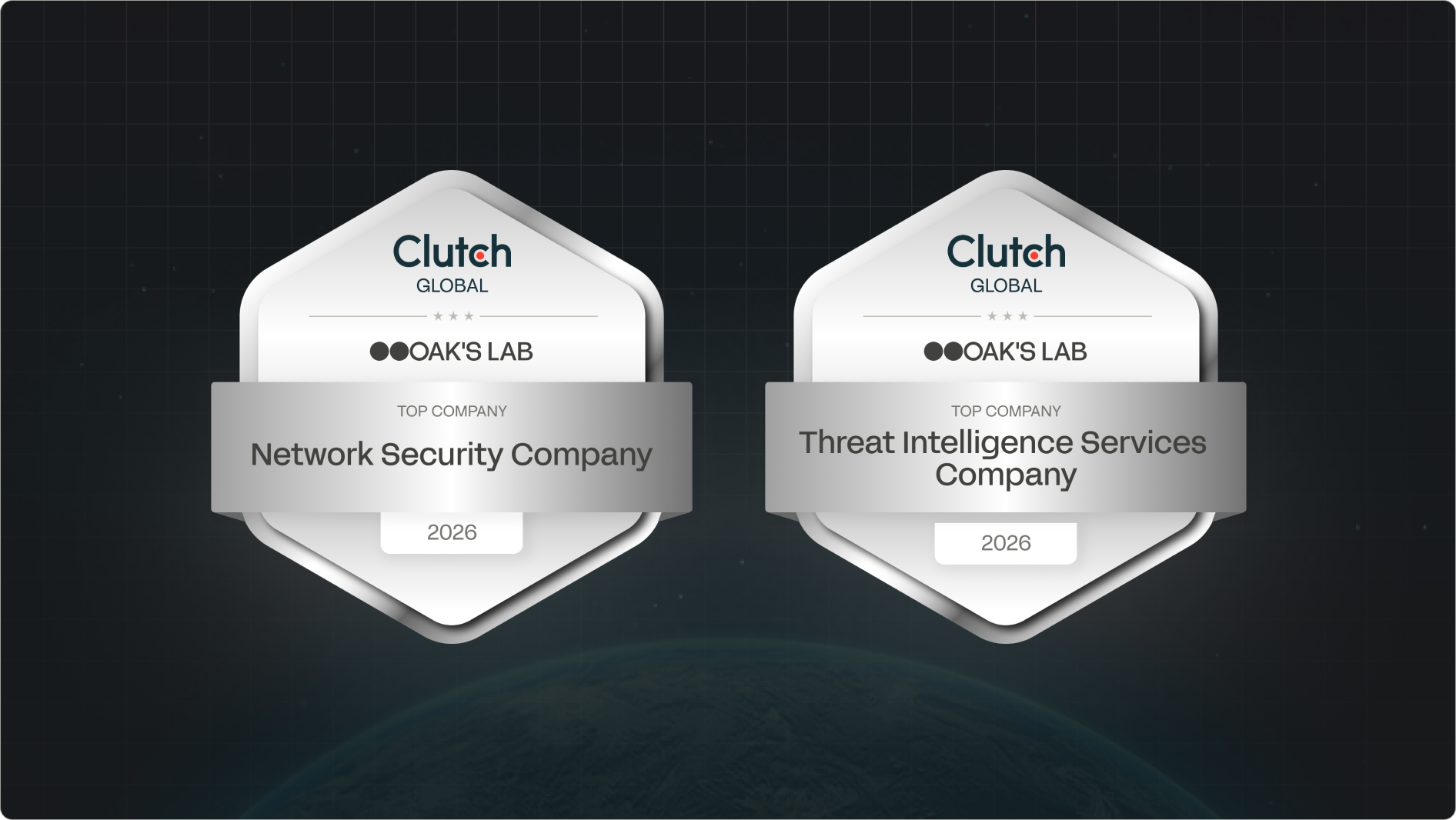
OAK'S LAB named a 2026 Clutch Global winner in threat intelligence and network security
Business
August 3, 2026

How to Find the Right Outsourcing Software Development Partner: A Framework for CTOs
Product Development
Technology
Business
July 15, 2026
What Actually Breaks as You Scale — And How We’ve Helped CTOs Fix It
Product Development
February 23, 2026
From Monoliths to Modular: How to Structure Engineering Teams as You Scale
Product Development
Business
Technology
July 23, 2025

A Practical Guide to Building Agentic AI Products
Technology
Product Development
January 9, 2025

Building AI-Powered Products Without ML Teams
Product Development
Technology
October 15, 2024

Behind the Innovation: Meet Lukáš
Culture
June 28, 2024

Planning the Perfect Offsite
Culture
June 13, 2024
.webp)
Behind the Innovation: Meet Ugur
Product Development
Business
Technology
March 18, 2024

Building a Strong Company Culture: The Core Values That Drive Our Success
Culture
Business
February 29, 2024