Knowledge Hub
A repeatable and lean framework for building valuable products, with proven guides and best practices across product, design, and engineering.
Most product teams face a false choice: innovate or execute. Spend time exploring new opportunities, and your roadmap slips. Focus entirely on execution, and you miss market shifts while your competitors don't.
Dual-Track Agile eliminates this trade-off. Strategic innovation and predictable delivery run in parallel, each supporting the other. Discovery explores what's possible while delivery executes what's validated.
Key Takeaways
Strategic innovation and predictable delivery aren't competing priorities. Dual-Track Agile runs them in parallel, so your team doesn't have to choose between exploring new opportunities and shipping committed work.
Innovation without discipline produces research that never ships. Delivery without innovation produces a product that stagnates. You need both, every sprint, with clear boundaries between them.
Predictable delivery is what actually creates space for innovation. When stakeholders trust that committed work will ship on schedule, they stop white-knuckling the roadmap and give discovery room to breathe.
The most common failure isn't picking the wrong balance between innovation and execution. It's cutting innovation entirely the moment timelines get tight, then wondering why the product looks the same three years later.
The Innovation/Execution Tension
Stakeholders demand predictable delivery. They need features shipped on schedule so marketing can launch campaigns, sales can close deals, and executives can hit quarterly targets. Miss a committed date, and the whole downstream plan unravels.
But markets shift. Competitors launch new capabilities. Customer needs evolve. Staying ahead requires exploring the unknown and pivoting when you discover better opportunities. If your team only executes the current plan, you're optimizing for a snapshot of the market that's already out of date.
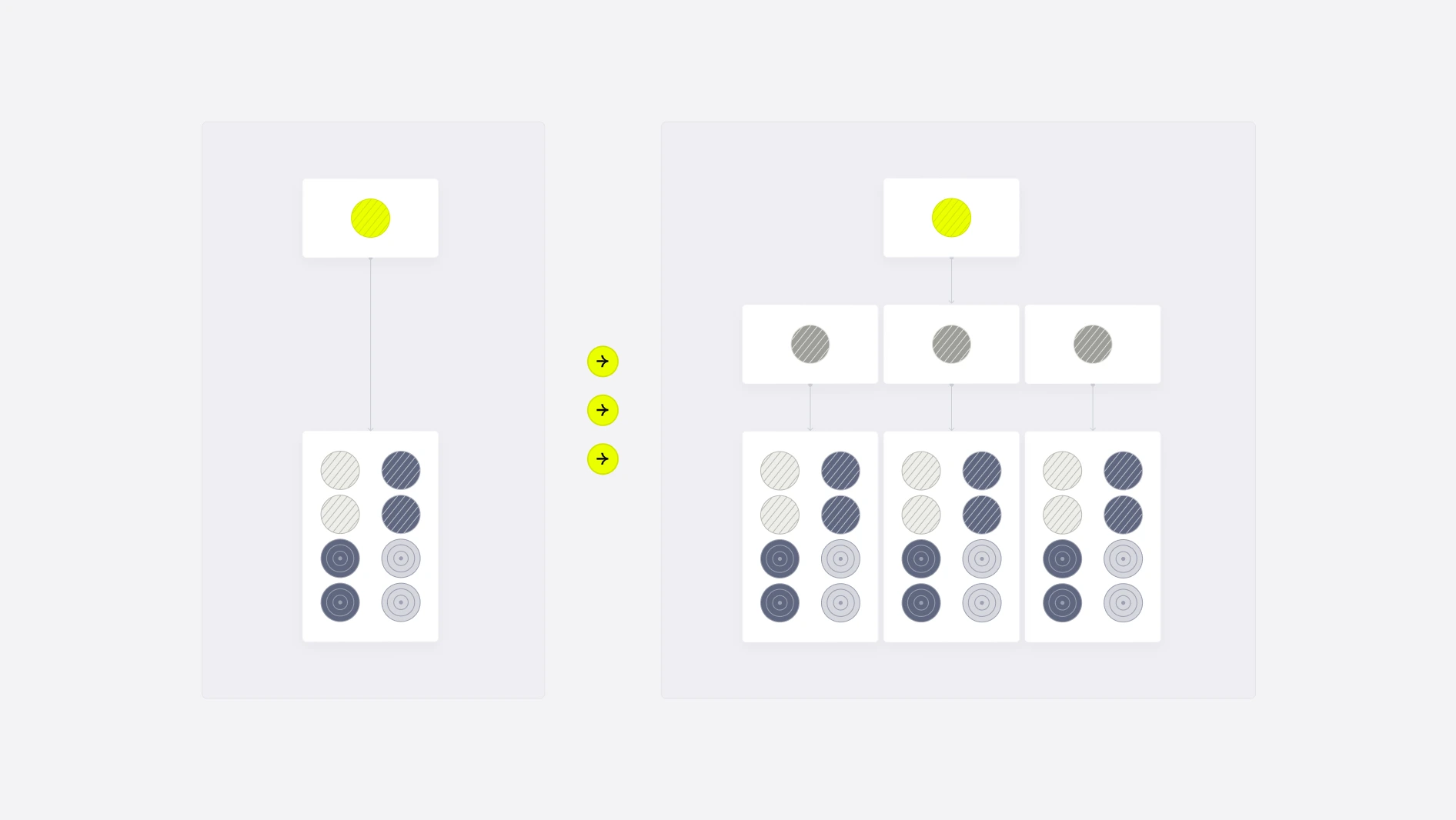
Dual-Track Agile solves this by separating the tracks. Delivery executes the validated roadmap with predictable velocity. Discovery explores new opportunities continuously. Both happen every sprint, and neither has to ask the other for permission.
What Strategic Innovation Means
Strategic innovation isn't random experimentation. It's disciplined exploration of opportunities that could significantly advance your business goals. The key word is "disciplined." Your discovery track isn't a sandbox where engineers tinker with whatever interests them. It's a focused effort to answer specific questions about what your product should become.
Strategic innovation activities include:
Market research: Understanding competitive landscape, emerging trends, and how customer needs are evolving before you're the last to notice
User research: Deep exploration of user problems, workflows, and pain points that your current product doesn't address
Technical exploration: Investigating new technologies or architectures that could unlock capabilities you can't deliver today
Business model innovation: Exploring new ways to create and capture value, whether that's new revenue streams, new market segments, or new pricing models
These innovation activities happen in the discovery track, running parallel to delivery execution.
How Innovation Feeds the Roadmap
Strategic innovation doesn't disappear into research black holes. It feeds the roadmap systematically:
Discovery explores an innovation opportunity through competitive research, user interviews, prototypes, and beta testing
If validation succeeds, the innovation becomes a roadmap item and gets prioritized against other validated features
If it scores high on impact, it enters delivery
Delivery builds the validated innovation with the same predictable velocity as any other feature
Post-launch, the team measures outcomes and uses results to inform future innovation exploration
This cycle ensures innovation produces business value, not just interesting research that lives in a Notion doc nobody reads.
How Predictable Delivery Enables Innovation
Here's the paradox most teams miss: predictable delivery creates space for innovation.
When stakeholders trust that committed work will ship on schedule, they're more willing to support discovery exploring new directions. Why? Because predictability reduces anxiety. Nobody's hovering over the roadmap wondering if the thing they promised a customer will actually ship. That trust buys your discovery track the breathing room it needs.
When engineering velocity is consistent, product teams can accurately plan innovation validation. You know how much capacity you have. You can make real commitments about what discovery will explore and when you'll have answers.
When releases happen continuously, innovation can reach users quickly. You don't need to wait for the annual big release to test whether a new capability resonates.
Predictable delivery isn't the enemy of innovation. It's the foundation that makes sustained innovation possible. Without it, every conversation about "exploring something new" gets shut down with "we can't afford the risk right now."
Common Innovation Mistakes
Innovation theater. Talking about innovation without actually doing it. Lots of brainstorming sessions, no validated experiments. Teams declare "innovation sprints" that produce slide decks instead of prototypes. Everyone feels productive. Nothing changes.
Innovation silos. Creating a separate innovation team that works independently from everyone else. Innovations never integrate into the main product because there's no connection between the innovation team's work and the delivery team's roadmap. You end up with a cool demo that never ships.
No innovation time. Delivery dominates completely. Discovery only refines work that's already on the delivery roadmap, never explores new opportunities. Three years later, the product looks exactly the same while competitors have evolved past you. Your team is efficient at building the wrong things.
No innovation discipline. Teams explore random ideas without connection to business goals. Engineers build "cool tech" that doesn't solve user problems or advance strategic objectives. Discovery becomes a hobby rather than a business function, and leadership eventually (and justifiably) shuts it down.
Stopping innovation during crunch. When timelines tighten, innovation gets cut first. This feels responsible in the moment, but it compounds problems because you're not validating future opportunities while executing current commitments. Every crunch period borrows from your future roadmap.
How to Protect Innovation Time
Innovation time gets protected by making it explicit, not optional. In sprint planning, discovery capacity is allocated: X% for execution refinement, Y% for innovation exploration. It's on the board, it's in the standup, it's not something that gets quietly deprioritized when a delivery task runs over.
Innovation exploration produces tangible outputs: prototypes, research reports, validation data. These get reviewed in sprint reviews alongside delivery work, because if innovation outputs aren't visible to stakeholders, they'll assume innovation isn't happening and reallocate that capacity to delivery.
Innovation success metrics are defined upfront: What are we trying to learn? What evidence would validate this opportunity? What would tell us to stop?
When innovation exploration reveals nothing worth pursuing, it's celebrated as successful learning rather than wasted time. Killing a bad idea early is one of the most valuable things discovery can do.
The Long-Term Competitive Advantage
Companies that balance innovation and execution build compounding advantages:
They ship predictably, which builds customer trust and makes sales cycles shorter
They innovate continuously, which creates differentiation that competitors can't easily replicate
They learn faster because innovation cycles are short and feedback loops are tight
We've seen this compounding effect with a publicly listed private equity firm building an AI-powered analysis platform under a compressed three-month timeline. Discovery ran a month of focused validation while the delivery track began building the first committed features. Neither track waited for the other. By week ten, the team had a functional proof of concept and a North Star roadmap that expanded the client's original product vision by an order of magnitude. The delivery track didn't miss a single commitment along the way. That's what the innovation/execution balance looks like in practice: the team validated an entirely new strategic direction while simultaneously shipping the work stakeholders were counting on.
Over time, these advantages compound. Predictable execution enables more innovation investment. More innovation creates more differentiation. More differentiation drives more growth. It's a flywheel, but only if both tracks are spinning.
The Balance That Works
Strategic innovation and predictable delivery aren't in tension when structured properly. Dual-Track Agile provides that structure.
Discovery explores new opportunities while refining execution work. Both happen every sprint, with dedicated capacity for each. Delivery executes validated work with consistent velocity. The roadmap shows both: what's committed for execution and what's being explored for potential.
This balance is what makes product teams sustainable. Pure execution burns teams out and produces a product that slowly becomes irrelevant. Pure innovation produces interesting ideas but no business value. The combination creates both impact and learning, sprint after sprint.
What This Means in Practice
Before restructuring how your team balances innovation and execution:
1. Review how your team actually spends discovery time
Review your recent previous sprints. What percentage of your team's total capacity went toward exploring genuinely new opportunities versus refining work that was already committed for delivery? Check if discovery exists on paper, but all of the work was just execution.
Validate by checking whether discovery produced any artifacts that changed the roadmap. If discovery hasn't influenced what gets built, it's either underinvested in or unfocused.
Red flag: Your team can't name a single feature in the current roadmap that originated from discovery exploration rather than a stakeholder request or customer escalation.
2. Check whether innovation survives schedule pressure
Review the last time your team was under deadline pressure. What happened to discovery capacity? Was it maintained, reduced, or eliminated entirely? How was that decision made, and by whom?
Validate by reviewing whether discovery capacity was maintained during your last tight deadline. Check sprint records or board history: did discovery work continue during crunch periods, or did it quietly disappear from the board? If "temporary" pauses routinely stretch to multiple weeks, innovation is being systematically sacrificed.
Red flag: Your team has an unwritten rule that discovery stops whenever delivery falls behind schedule. That rule guarantees your product roadmap is entirely reactive.
3. Measure whether innovation outputs actually ship
Track innovation initiatives from previous quarters. How many progressed from discovery exploration to a validated roadmap item to a shipped feature? What's the conversion rate?
Validate by counting: Of the ideas that entered discovery, how many produced validation data? Of those, how many became delivery commitments? If the funnel is wide at the top and empty at the bottom, your innovation process has a handoff problem between discovery and delivery.
Red flag: Your team has a graveyard of "validated" ideas that never made it onto the delivery roadmap because committed work always takes priority.
Common Questions About Balancing Innovation and Execution
Q: How do we convince stakeholders to protect innovation time when there's always urgent delivery work?
A: The best case you can make is with evidence. Review recent features your competitors launched that you didn't see coming, and then estimate the business impact of being months late to respond. That's the cost of zero innovation time. Most stakeholders aren't opposed to innovation, but are nervous about unpredictability. Use the three-tier roadmap structure (committed, probable, exploration) and make it clear that exploration of innovation doesn't compete with committed delivery dates. When stakeholders can see that their committed features are protected, the resistance to innovation time usually drops.
Q: What happens when discovery reveals that a committed delivery feature is solving the wrong problem?
A: This is one of the harder judgment calls in dual-track, and it comes up more often than teams expect. The answer depends on how far along delivery is and how significant the finding is. If engineering hasn't started building yet, reprioritizing is straightforward: the feature goes back through scoping with the new information. If development is underway, the Product Lead evaluates whether the insight is strong enough to justify the cost of stopping mid-build. A small course correction to the existing scope is different from scrapping weeks of engineering work. The business case process helps here: estimate the cost of continuing with the original plan versus the cost of pivoting, and make the call based on evidence rather than sunk cost. The important thing is that the decision gets made explicitly rather than defaulting to "we already started, so let's finish." Completing something you know is wrong is the most expensive outcome.
Q: How do you prevent discovery from becoming a research team that never ships anything?
A: By requiring tangible outputs with clear success criteria. Every discovery initiative should answer a specific question within a defined timeframe. "Explore AI opportunities" is not a discovery initiative, but "Validate whether AI-powered document analysis reduces processing time by 50% for our top 10 clients, with a working prototype in six weeks" is. When discovery has deadlines and deliverables just like delivery does, the "research that never ships" problem disappears because there's no room for open-ended exploration without accountability.
Q: Should the same people work on both innovation and execution, or should we have separate teams?
A: Same people, different time allocations. Separate innovation teams create the silo problem, where innovations never integrate into the main product. When your engineers, designers, and product people split their time between discovery and delivery, they naturally carry context between the two tracks. The engineer exploring a new architecture in discovery understands the constraints of the current system from delivery work. The designer prototyping a new workflow knows which patterns users already understand. That cross-pollination is where the real value of dual-track lives.
Q: How does an external development partner like OAK'S LAB handle the innovation/execution balance?
A: The same dual-track structure applies, with explicit capacity allocation agreed during project setup. We define the percentage of sprint capacity allocated to discovery versus delivery, and both tracks produce visible outputs reviewed during sprint ceremonies. This is part of how we structure Roles & Responsibilities at the start of every engagement. The Product Lead balances tracks and adjusts allocation based on the business's needs at any given phase, whether that's heavy discovery for a new product or heavy delivery for a scaling one.
Subscribe to our newsletter and receive the latest updates from our CEO.
All articles
(42)
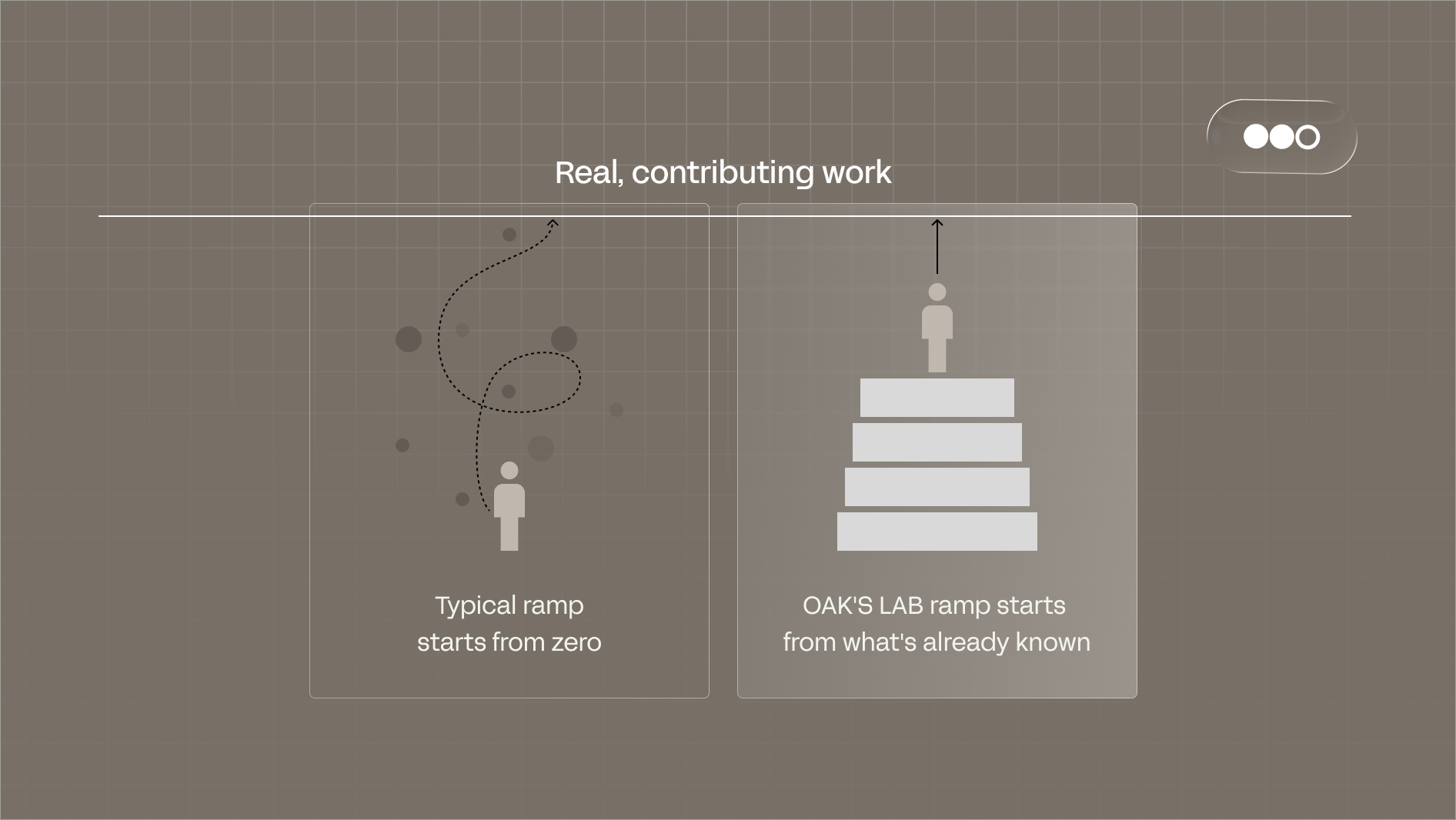
How Senior Engineers Ramp in Their First Week
Product Development
September 8, 2026
Why More Engineers Won't Fix Your Velocity Problem
Product Development
Technology
August 5, 2026
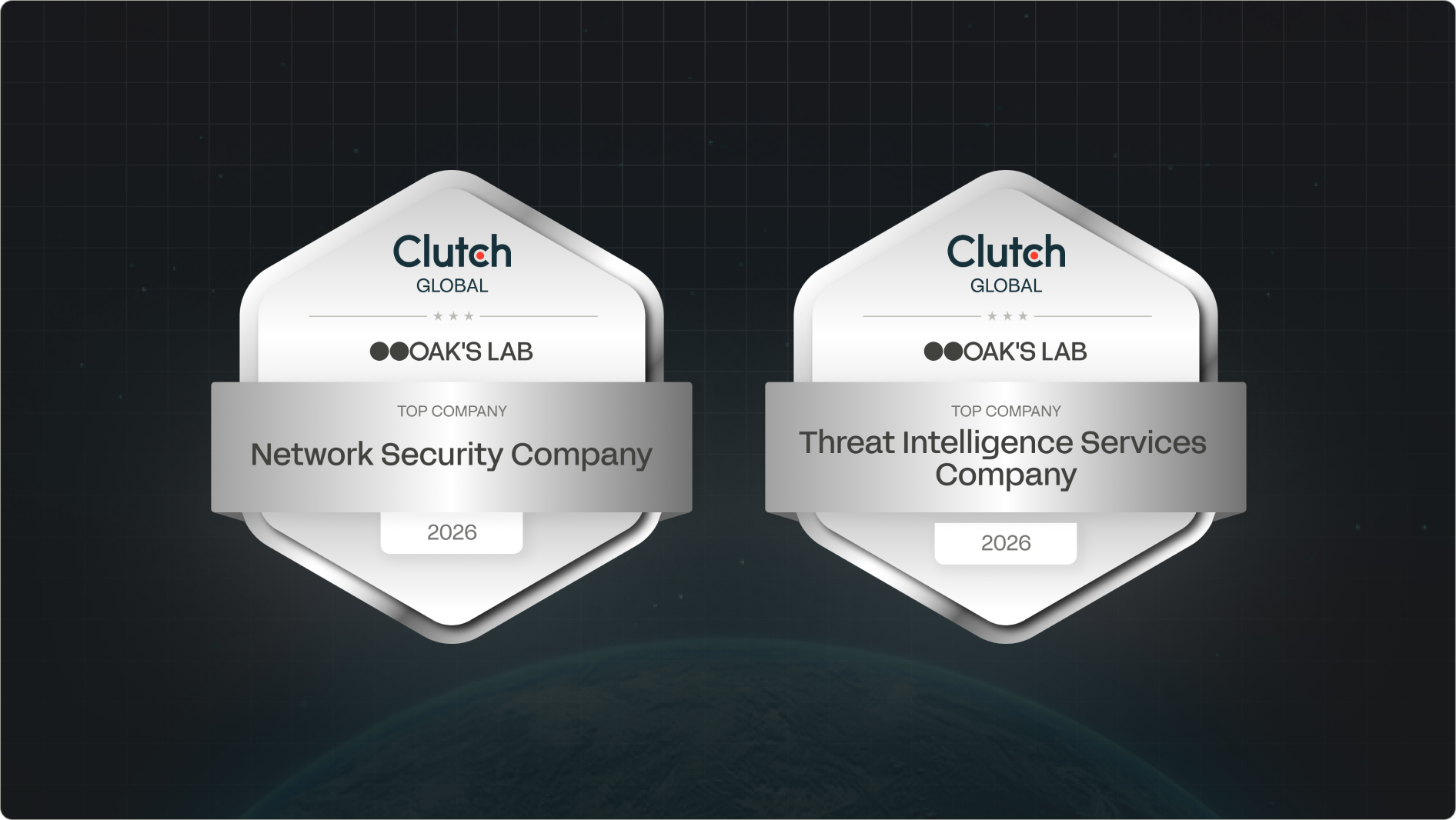
OAK'S LAB named a 2026 Clutch Global winner in threat intelligence and network security
Business
August 3, 2026

How to Find the Right Outsourcing Software Development Partner: A Framework for CTOs
Product Development
Technology
Business
July 15, 2026
What Actually Breaks as You Scale — And How We’ve Helped CTOs Fix It
Product Development
February 23, 2026
From Monoliths to Modular: How to Structure Engineering Teams as You Scale
Product Development
Business
Technology
July 23, 2025

A Practical Guide to Building Agentic AI Products
Technology
Product Development
January 9, 2025

Building AI-Powered Products Without ML Teams
Product Development
Technology
October 15, 2024

Behind the Innovation: Meet Lukáš
Culture
June 28, 2024

Planning the Perfect Offsite
Culture
June 13, 2024

Behind the Innovation: Meet Ugur
Product Development
Business
Technology
March 18, 2024

Building a Strong Company Culture: The Core Values That Drive Our Success
Culture
Business
February 29, 2024