How to Find the Right Outsourcing Software Development Partner: A Framework for CTOs

A CTO's framework for choosing an outsourcing software development partner: the questions to ask, and the green and red flags that predict how a build will actually go.


You're a CTO at a fast-growing company with a capable engineering team. But, right now, at least one of these is true:
- You need more capacity than your team can provide,
- Your software development lifecycle is not at the level the business needs, or
- You need to build something outside your team's wheelhouse.
So, you’re considering an external partner.
But you’ve heard the horror stories (or, if you’re unlucky, have lived them yourself): vendors who present well during the sales process and come in with attractive pricing, but who then never meet deadlines and leave you with a codebase that either breaks under pressure or needs rewriting. By the end, you end up spending far more time and money than if you’d built in-house.
This article is a framework for avoiding that scenario. We’ll walk through the questions you should ask yourself when evaluating a software development partner, and the green flags and red flags to spot.
Along the way, I’ll use examples from OAK’S LAB, where we’ve delivered more than 65 product builds that have helped our clients reach a combined valuation of $7B+ and raise a total of $1.7B+ in funding.
Before You Start Vetting: Get Clear on What You Actually Need
The biggest mistake CTOs make is evaluating partners before they’re clear on what they actually need.
Before you talk to anyone, you need to be clear on which of these three situations apply to you:
Capacity gap: Your product org is mature but doesn't have enough bandwidth. You need experienced product, design, engineering, or QA people who can plug into your existing delivery process.
Delivery problem: Your team has capacity but isn't delivering at the pace or quality the business requires. A strong partner can bring fresh perspective, identify bottlenecks and pressure points, and help to raise the maturity of your engineering organization.
Capability gap: You need to build something your current team isn't equipped to deliver: a greenfield platform, AI product, mobile app, or a product with an unfamiliar tech stack. Here, you need technical and product leadership, not just extra capacity.
Many organizations face more than one of these challenges, but the framing still matters because it changes how you evaluate a partner.
A capacity gap puts the focus on evaluating the people you'll work with day-to-day. A delivery problem puts the focus on process maturity. Meanwhile a capability gap, where you need a team to own discovery and delivery end-to-end, means each of the following points will carry equal weight.
The Evaluation Framework: Green Flags and Red Flags
These are the questions I’d ask any software development partner before signing a contract.
None of them are trick questions. They’re designed to reveal how a team thinks, makes decisions, and behaves once a project is underway; not how well they sell themselves in a pitch.
1. Do they ask the right questions before proposing anything?
This reveals whether they’re thinking about the project as a whole or a checklist of objectives.
Green flag: The first meeting is mostly them asking questions to build context before sharing any solutions. They ask about your goals. Your current state. What's already been tried. What’s failed. Where the bottlenecks are.
Strong partners run some version of a discovery process before they ever talk about the approach, scope, team, timeline, or budget. They should ask about your existing engineering team: how it's structured, how it works, and how an external team would fit alongside it.
If they don’t ask about the people they'll be working with, they’re probably optimizing for the sale rather than a long-term partnership.
Red flag: They walk in with an immediate solution, a confident estimate, and a proposal ready to sign within 48 hours. That’s a sign that usually means they’ve mapped your problem onto a template without thinking about your organization or unique product requirements.
Remember: If they won’t challenge your assumptions during the sales process, they probably won't challenge them during the build either. That's how expensive mistakes get made.
At OAK'S LAB: We spend the first conversation trying to understand the outcome a client wants to achieve, not the feature list they want built. There's usually a gap between the two, and the best product decisions come from closing that gap before a line of code is written.
2. How do they talk about risk?
This tells you whether or not they understand the responsibility and challenges.
Green flag: They bring up risk before you do. Experienced partners have seen enough projects go sideways to recognize common failure modes. They should be able to identify risks specific to your product, not just generic process risks, and explain how they’d reduce them.
Good planning isn’t pessimistic. Addressing these risks upfront prevents them from becoming crises later.
Red flag: They’re optimistic about everything. Every timeline is achievable, every scope is reasonable, every concern you raise gets a reassuring "we've handled that before." Confidence is valuable, but blind optimism is a warning sign. When friction appears (and it always does), you want a partner who has planned for it, not one who is seeing it for the first time alongside you.
At OAK'S LAB: Every proposal we write includes a dedicated section on project risks and how we’d mitigate them. That might include unrealistic MVP scope, unclear ownership of requirements from the business side, technical feasibility concerns, or aggressive timelines. We’d rather have those conversations before a project starts than after it’s already slipping.
3. Do they think in outcomes or outputs?
This tells you whether they’ll behave like an order filler or a real product partner.
Green flag: The best partners don’t just build features; they help validate whether those features solve the right problems. They talk about what success looks like for your business, not just what they'll deliver.
When discussing outcomes, they ask about adoption, retention, revenue, operational efficiency; whatever the real measure of success is for your product. They’ll want to understand how their work will fit into your wider product strategy.
Red flag: Every conversation revolves around deliverables and timelines. Feature lists. Story points. Velocity.
These metrics matter, but they’re not the goal. A partner who only talks about outputs is telling you how they’ll measure success. They’ll deliver what was scoped, but will consider the question of whether it achieves your goals or not your problem.
At OAK'S LAB: Our teams measure success against outcomes, not outputs. If we think a requested feature won’t achieve the result our client is aiming for, we’ll say so. We’d rather challenge the plan early than deliver something that was asked for but that won’t achieve the outcome.
4. How do they handle scope and changing requirements?
This tells you how easy or hard it will be to work with them over the long term.
Green flag: They have a clear, fair process for handling changes. They share their framework for how out-of-scope work gets identified, estimated, and approved before the project begins. They don't absorb scope creep silently, but they also don't treat every clarification as a scope change.
Ask how the initial scope gets created: do they just take your requirements at face value, or do they challenge and validate them before committing to a plan?
Red flag: They offer vague answers about scope management. If they can’t (or won’t) explain how scope connects to timeline, budget, and prioritization, expect surprises later. Ambiguity here almost always leads to budget spikes, delays, and a poor experience on both sides.
At OAK'S LAB: We work on a time-and-materials model with a fixed monthly cost per team member, giving you predictable delivery costs throughout the engagement.
For greenfield product builds, discovery begins during the proposal phase. Together, we define business outcomes, create an initial scope, and estimate the work, drawing on experience from more than 65 digital products delivered over the past 10 years. From there, we recommend the right team, timeline, and budget, which become the project’s guardrails.
Once delivery begins, our focus shifts from executing a fixed feature list to achieving agreed outcomes. We establish a long-term product vision (our North Star) and continuously prioritize the work that delivers the greatest value.
As with any complex software project, scope is the variable, not the team, budget, or timeline. As we learn more from users, the market, and the product itself, priorities evolve. Rather than increasing costs or extending delivery, we adjust the scope through continuous prioritization, ensuring the highest-impact work is delivered first.
The result is a predictable team, timeline, and budget, with enough flexibility to build the right product; not just the product outlined at the start of the project.
5. What does their software development lifecycle look like?
This reveals whether their delivery process is repeatable or improvised.
Green flag: They can explain their delivery process in detail. Not just, "We do agile," but how business needs are validated and translated to requirements, designs, code, testing, and production releases. They should have clear engineering standards across code review, testing expectations, CI/CD, and security practices.
Strong partners build repeatable systems because they've already learned that consistency beats ad hoc processes.
Red flag: The process feels vague or reactive. They'll "keep you updated" or "flag anything important," but can’t explain how work is managed or quality is maintained. For a multi-month product build, this is a recipe for surprises at the worst possible moments, and is likely a signal about the quality of what they'll ship.
At OAK'S LAB: Every project follows the same delivery rhythm, with daily standups and sprint planning, refinement, demos, and retrospectives. We run regular steering committee meetings between senior leaders on both sides to review progress, make decisions, and gather feedback.
These steercos are how we keep projects healthy and identify drift early.
6. Who is actually doing the work?
This tells you how reliably your product build will be handled.
Green flag: You meet the people who’ll actually build your product before you sign. Not just the account manager or founders, but the engineers, designers, and product managers who will actually be in your Slack channel.
You should be able to ask your product team questions, understand their experience level, and see whether they've solved similar problems before. You should also get a clear commitment on availability: which team members will be dedicated to your project, and which will be split across multiple engagements.
Red flag: The senior people disappear once the contract is signed. You buy into an impressive pitch, then discover the work is handed off to a junior team after project kick-off. This is one of the most common patterns in outsourcing.
To avoid this, make team introductions part of the buying process. Ask directly: who’s working on this full-time, who’s shared across projects, and what is the seniority mix?
At OAK'S LAB: Everyone on a delivery team is dedicated to a single project at a time. The proposed team is shared during the sales process, and the staffing plan is tied directly to the budget. No context switching, no competing priorities.
The goal is simple: our team should feel like our clients’ in-house team in Prague.
7. How do they handle time zones?
This reveals whether or not the geographical disparity will become an issue.
Green flag: They have a deliberate approach to working across time zones. At a minimum, there should be a few hours of genuine daily overlap where both teams are online, available for meetings, and able to respond quickly.
The best partners will use the time difference to your advantage. While your team is offline, work continues on their end so meaningful progress is waiting for you when the next day begins.
Red flag: They tell you time zones "won't be a problem" without explaining why. There are no defined overlap windows, there’s no clear approach to synchronous versus asynchronous work, and they can’t answer the simple question: what happens when something breaks in production while your team is asleep?
At OAK'S LAB: Most of our clients are in the US, so our delivery model is built around that reality. We establish daily overlap windows where the whole team works alongside the client, then use the remaining hours for uninterrupted execution. Once software reaches production, we run an on-call support model with dedicated team members available 24/7.
For clients serving multiple markets, that coverage often becomes an operational advantage.
8. How do they use AI in their software development lifecycle?
Almost everyone claims to use AI. This reveals how considered AI is within their delivery process.
Green flag: They can explain where AI fits into their delivery process and the impact it’s had. Not just “we use AI tools," but how AI specifically supports discovery, design, engineering, testing, and documentation. Improvements in speed or quality are measured. A mature AI practice should also leave your own team better equipped to adopt those ways of working over time.
To assess this, ask for evidence. If they can't point to specific workflows, metrics, or examples, AI is probably being used on an ad hoc basis rather than as part of a repeatable delivery system
Red flag: They make broad claims about "leveraging AI" without explaining where it’s used or what difference it’s made. Most vendors will say they use AI because it's now expected, but very few will have redesigned how they deliver software around it. You should also ask how AI factors into their security model. If they haven’t thought that through, it’ll become a problem as your own security requirements grow.
At OAK'S LAB: We've fundamentally rebuilt how we deliver products around AI, achieving an average of 2x faster delivery on greenfield products, with some projects seeing productivity gains of up to 5x. We put that down to three core capabilities:
First, context engineering: AI works from continuously updated and structured project knowledge built from meeting transcripts, documentation, and team discussions.
Second, AI-native documentation: everything lives in Outline, a markdown-native platform that AI can read and maintain.
Third, executable methodology: our proprietary development framework, The OAK'S LAB WAY, has been turned into reusable AI skills that guide scoping, design, coding, engineering, and QA while making humans orchestrators who are accountable for every decision.
9. What is the culture of their company?
This tells you whether they understand the challenges of embedding into existing teams.
Green flag: They can describe in detail how their team works, they don’t just parrot the values on their website. You should be able to see those behaviors for yourself when you interact with the team.
Also, while geographic and cultural differences are real and matter, they shouldn’t be obstacles. The outsourcing partner should understand this and know how to address these differences openly before the engagement starts.
Red flag: They describe their culture with generic phrases like “we’re collaborative” or “we’re client-focused,” but can’t explain how they navigate differences in communication styles, expectations, ways of working, or cultural backgrounds.
At OAK’S LAB: Most of our team is based in the Czech Republic, while the majority of our clients are in the United States. These cultures communicate differently. Americans often approach work with optimism and ambition, while Czechs tend to be more direct, pragmatic, and skeptical.
Rather than trying to erase those differences, we’ve learned to combine them. The result is a culture that’s ambitious but grounded, fast-moving but thoughtful, and direct while remaining collaborative.
10. What does their IP and security posture look like?
This tells you how much of a headache security concerns will be down the line.
Green flag: Full IP ownership is explicit in the contract. Everything produced belongs to you: code, designs, documentation, infrastructure configurations. A strong partner also treats documentation as part of product delivery, making it easy to hand work over or bring work in-house later.
On the security side, look for evidence of formal practices: certifications, defined engineering standards, and clear answers on access management, data handling, and AI-assisted workflows. For most CTOs, a partner's security posture is a good indicator of how seriously they take professional responsibility.
Red flag: IP ownership is vague or buried in legalese. Or, even months into the engagement, there's no living documentation and all institutional knowledge lives in the heads or tools of people who don't work for you. When it comes to security, they offer vague answers.
A vendor that can't speak clearly about access controls, data handling, and security practices is one who hasn't thought through the implications of holding your codebase and customer data.
At OAK'S LAB: We've built our process specifically to avoid vendor lock-in and ensure security. All outputs belong to the client from day one and, wherever possible, we work inside our clients’ existing tools and infrastructure instead of introducing parallel systems. We’re also ISO 27001 certified, meaning our information security management practices have been independently audited and verified.
11. Can their references tell you something specific?
This tells you how confident they are in their track record and work.
Green flag: You can speak to multiple clients, ideally both current and former, and they can describe how the partnership worked when things became difficult. That’s when character shows.
If you have the chance: Ask what went wrong, how problems were handled, and whether they’d choose the same partner again.
Red flag: References are unavailable, carefully curated, or only willing to speak about positives. If you can, try and ask these client references more difficult questions: Was there ever a moment they considered switching vendors? What would they do differently? How did the vendor respond when priorities changed, deadlines slipped, or expectations diverged? The answers to those will tell you far more than another success story.
One Final Test: How Do They Handle Pushback?
Before you sign anything, give your top outsourcing candidate a hard question. Push back on something in their proposal: the timeline, the team size, the approach. Watch how they respond.
A strong partner won’t become defensive or immediately concede the point. They'll explain their reasoning, consider your point, and either defend their position with evidence or acknowledge the validity of your concern.
A weak partner will tell you whatever they think will keep the deal moving.
That instinct (telling you what you want to hear rather than what you need to know) is the root cause of most outsourcing failures. It starts in the sales call and then reappears when timelines slip, scope balloons, and difficult conversations get delayed by weeks.
The partners worth working with are the ones who are willing to challenge you early, because they know that discomfort in week one is far cheaper than a crisis in month four.
What Good Looks Like
When you find the right partner, the dynamic is noticeably different from day one.
They push back on your assumptions. They flag risk before you ask. They have a process that doesn't depend on any one individual, and they introduce you to the actual team before you commit. Contracts are clean, the IP is clearly yours, and their security posture is something you'd be comfortable defending to your board.
Most importantly, they care about whether the product succeeds, not just whether the project gets delivered.
That's the kind of partner worth finding (and trusting with your builds).
Subscribe to our newsletter and receive the latest updates from our CEO.
Top articles
OAK'S LAB named a 2026 Clutch Global winner in threat intelligence and network security
August 3, 2026
OAK'S LAB has been named a 2026 Clutch Global winner, ranking among the top firms worldwide in threat intelligence and network security.
How to Find the Right Outsourcing Software Development Partner: A Framework for CTOs
July 15, 2026
A CTO's framework for choosing an outsourcing software development partner: the questions to ask, and the green and red flags that predict how a build will actually go.
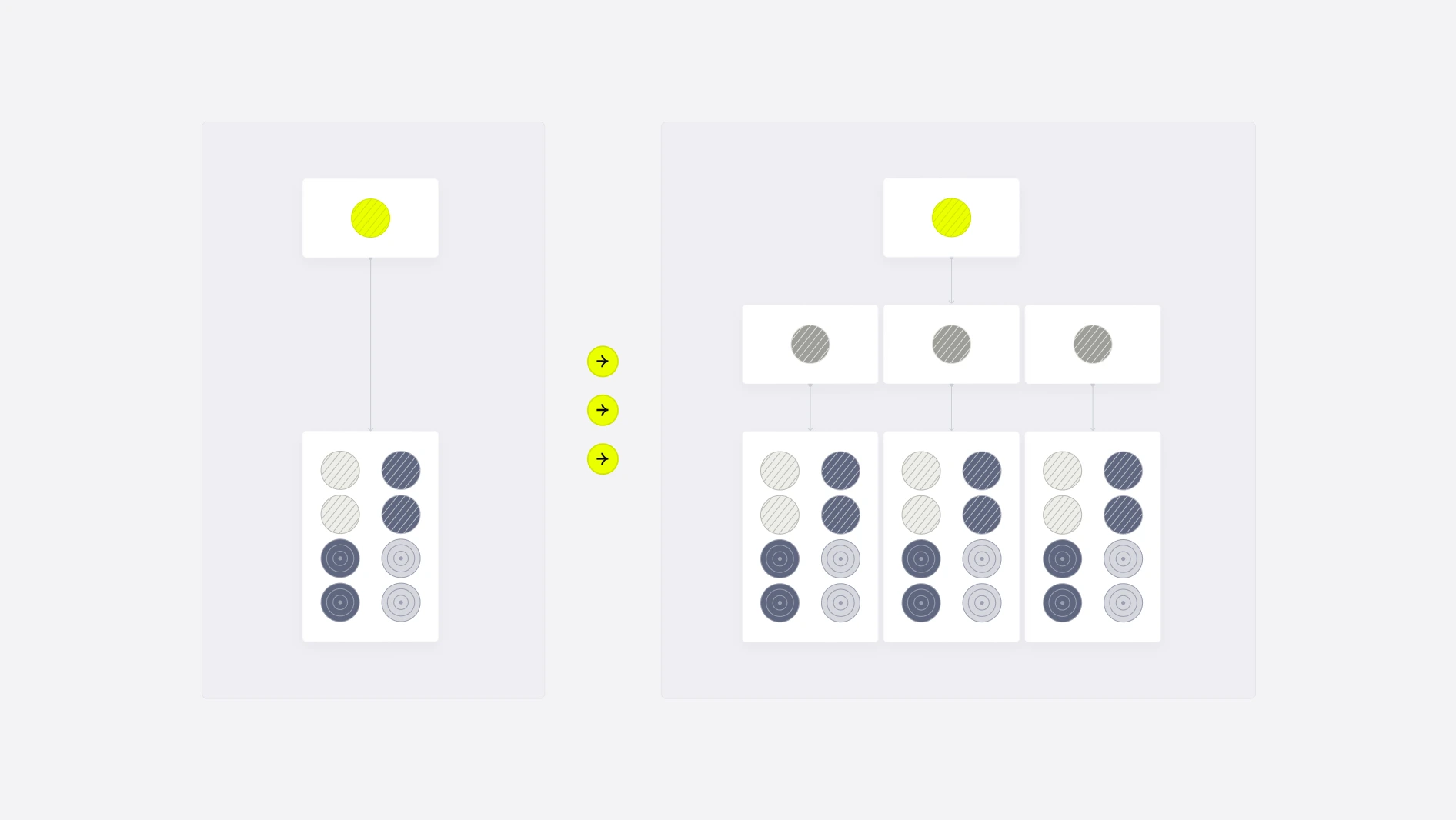
From Monoliths to Modular: How to Structure Engineering Teams as You Scale
July 23, 2025
Scaling tech companies often hit bottlenecks as old engineering structures slow progress. This guide covers when to restructure, proven team models, and key principles to scale effectively.

A Practical Guide to Building Agentic AI Products
January 9, 2025
Agentic AI systems transform workflows by using specialized agents to achieve customized, efficient, and scalable solutions. At OAK'S LAB, we design these systems to help businesses adapt and thrive in an AI-driven world.

Building AI-Powered Products Without ML Teams
October 15, 2024
Learn how to build AI-powered products without a dedicated machine learning team. This article outlines practical steps for integrating AI using pre-built models, improving your product's personalization, automation, and efficiency with minimal investment.

The OAK’S LAB WAY: An Introduction to Our Product Development Methodology
January 23, 2023
Our product development methodology designed to take an early-stage startup from pre-seed to series A and beyond.

How to Set Your Startup’s Mission & Vision
March 14, 2023
The twin north stars navigating startup founders and our teams on the journey to build a product that makes a big impact in the world.

Building Products with LLMs | 7 Tips for Success
August 1, 2023
Over the last few months, we’ve been fortunate enough to work with some startups that have LLM-driven products. Here are the best practices that we’ve learned along the way.

The Ultimate 7-Slide Formula for a Winning Startup Pitch Deck
May 24, 2023
Securing a seed investment is great validation and a big boost for early-stage startups; however, for first-time founders navigating the venture capital world isn’t easy. A well-crafted pitch deck can open investor doors and become the starting point from which an investment is made.